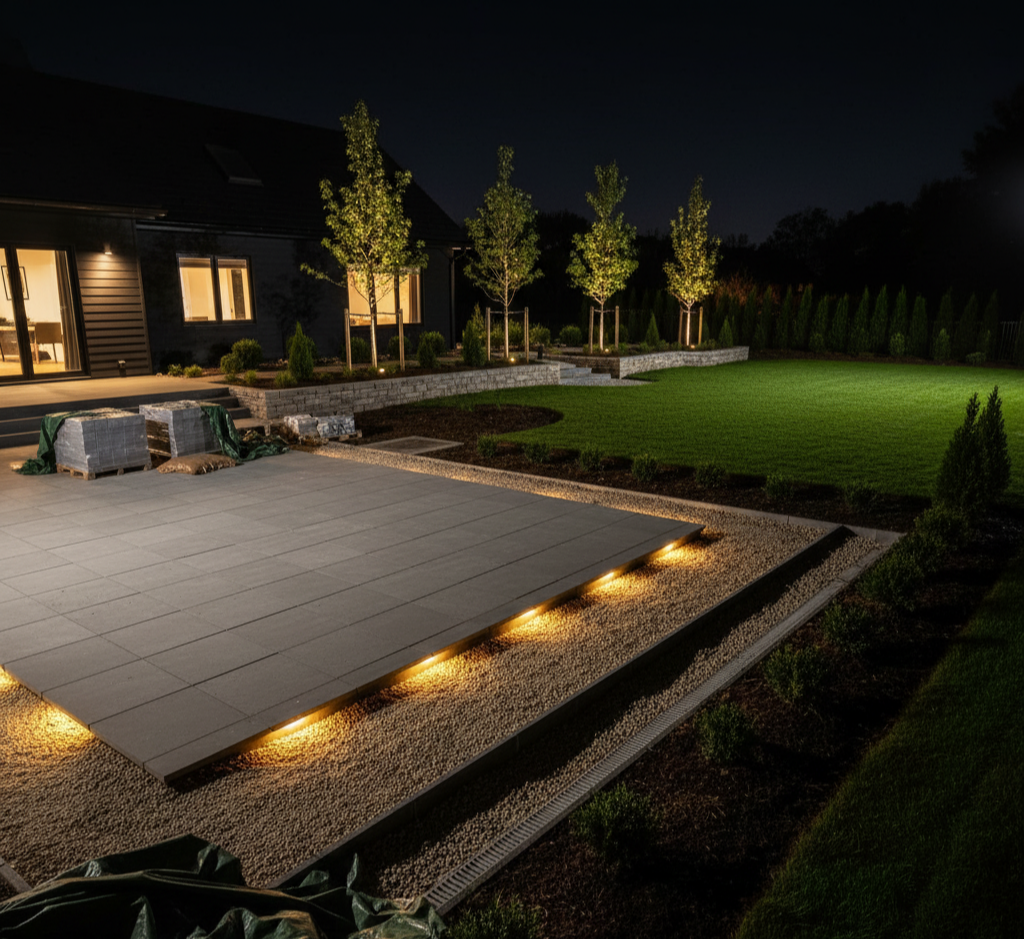
The Autumn Sweet Spot
Most people assume that hot, sunny summer days are ideal for construction. They are wrong. While summer is busy, it is scientifically hazardous for concrete.
The Science of the Slow Cure: Why Cooler is Better
Concrete does not "dry" like a wet towel; it cures through a chemical reaction called Hydration. This reaction generates its own internal heat (exothermic). When you pour concrete in July, the blazing sun plus the internal chemical heat can cause the water in the mix to evaporate too quickly. This "flash-curing" leads to surface crazing, shrinkage cracks, and a weaker overall slab.
In contrast, the crisp 15°C days of September and October in Mississauga provide the perfect curing environment. The cooler air keeps the moisture in the concrete longer, allowing the crystal lattice structure to form slowly and evenly. A slow cure is a strong cure. A driveway poured in the fall often achieves a higher long-term Megapascal (MPa) rating than one rushed in the heat of August.
The Danger Zone: When Fall Turns to Winter
However, the window does close. The risk in late fall (late October/November) is not the daytime high, but the overnight low.
The Threat of Frost (Frost Heave)
Fresh concrete is full of water. If the ambient temperature drops below freezing (0°C) before the concrete has reached a minimum strength of 500 PSI, the water inside the pores will freeze and expand. This expansion shatters the microscopic bonds of the cement paste before they have fully set. The result is a driveway that turns to gravel in the spring.
The Leaf Factor
A logistical nuisance of autumn is biological debris. Wet maple leaves falling onto a freshly troweled surface contain tannins that can permanently stain the curing concrete. A professional crew must manage the site environment aggressively to keep the surface pristine during the crucial first 24 hours.
The Cinintiriks Approach: Engineering the Fall Pour
At Cinintiriks, we don't fear the cold; we engineer around it. We extend the construction season safely into late November by manipulating the variables:
Non-Chloride Accelerators: We add specialized chemicals to the mix that speed up the initial set time, ensuring the concrete is hard and frost-resistant before the sun goes down.
Heated Concrete: Our ready-mix partners use heated water and hot aggregates at the plant, so the concrete arrives at your home warm and ready to kickstart its reaction.
Thermal Blanketing: This is the game-changer. If the forecast calls for a chilly night, we immediately cover your new driveway with R-value insulated curing blankets. These trap the concrete's own exothermic heat, keeping the slab toasty warm all night while the air outside drops to freezing.
"Summer builds fast. Fall builds strong. Winter destroys the unprepared. We are always prepared."
Don't let the changing seasons delay your luxury hardscaping. Contact Cinintiriks to engineer a flawless, climate-controlled autumn pour.
FAQ: Cold Weather Concrete
What is the lowest temperature you can pour concrete in Ontario?
Standard pouring practices stop when the temperature is consistently below 5°C. However, with "Winter Heat" protocols (hot water, accelerators, and blankets), we can safely pour down to roughly -2°C or -3°C, provided the ground is not frozen.
Does rain in the fall ruin a new concrete driveway?
A light mist is harmless and actually helps the cure. A heavy downpour is dangerous. We monitor the radar instantly. If rain hits while finishing, we cover the surface with poly sheeting (vapor barrier plastic) to prevent the surface paste from washing away.
Is it cheaper to install a driveway in the fall?
Not necessarily. While contractors might be eager to fill their schedule before winter, the material costs often rise. The "Winter Heat" surcharge from the concrete plant (for heating the water and aggregates) and the cost of accelerators typically adds a small premium to the mix price.
The Final Word
Do not be afraid of the fall. Used correctly, it is a season of superior strength. The only risk is hiring a contractor who doesn't own thermal blankets or doesn't check the overnight low. With Cinintiriks, the season ends when we say it ends.