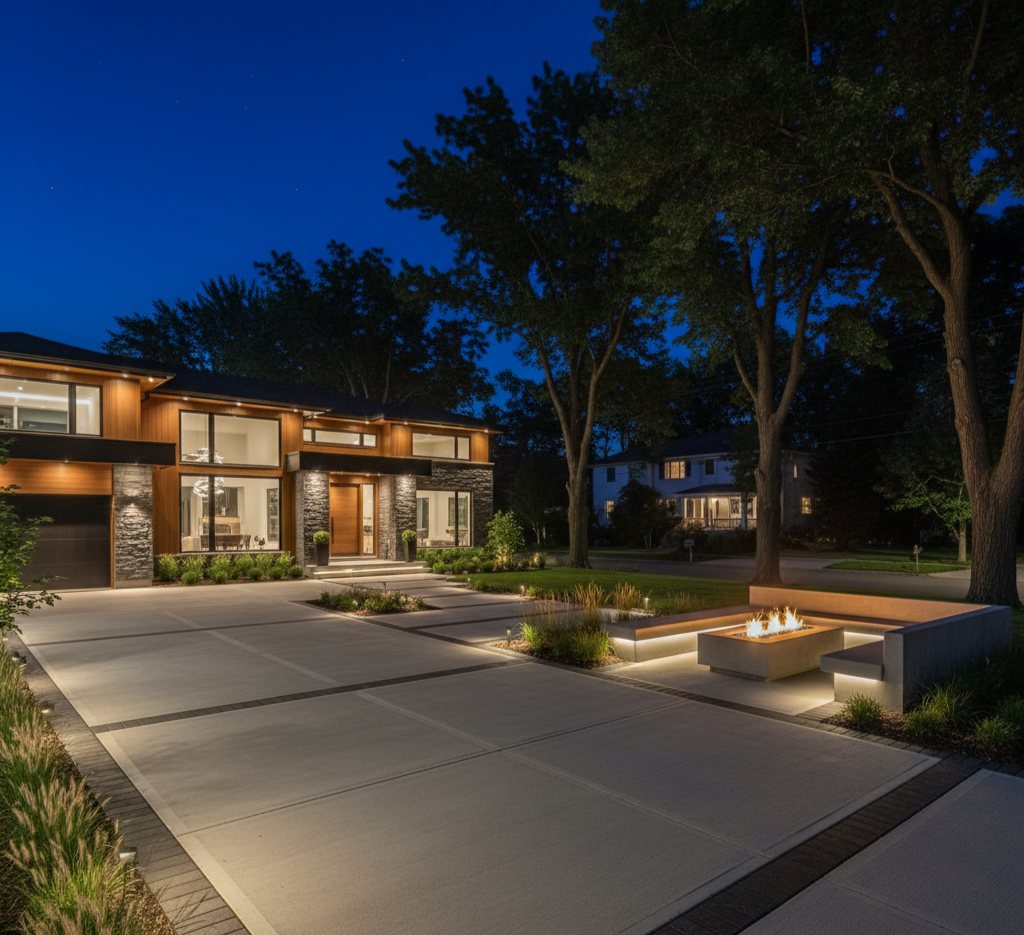
For the luxury homeowner, a driveway is not just an entrance; it is a permanent structural change to the landscape. At CININTIRIKS, we operate at the intersection of Design Ambition and Municipal Reality. Before we pour a single yard of concrete, we must navigate the labyrinth of Bylaw Compliance.
This 2026 Bylaw Guide dissects the regulations that protect your investment from fines, forced removal, and resale nightmares.
The Golden Rule of Permits
"If you touch the City's sidewalk, you need a permit."
This is the baseline. However, the distinction lies in the scope of work:
Resurfacing (Often No Permit): If you are simply replacing an existing asphalt driveway with concrete—keeping the exact same width and length—you typically do not need a zoning variance. However, you still need a "Right-of-Way" permit if we are parking a dumpster on the street.
Widening/Altering (Always Permit): If you want to widen your driveway to fit a third car, or cut the curb to expand the detailed entrance, you are entering the realm of Municipal Licensing and Standards. This is where CININTIRIKS steps in.
City 1: The Toronto Bylaw Landscape
Toronto protects its "Garden City" reputation aggressively. The days of paving the entire front yard are over.
The Soft Landscaping Ratio (50/75 Rule)
In most Toronto wards, the Zoning Bylaw mandates that a minimum of 50% of the front yard must be "Soft Landscaping" (grass, shrubs, flowers—materials that allow water to infiltrate). In some older neighbourhoods, this requirement is as high as 75%.
The Trap: Interlock and gravel do not count as soft landscaping. They are considered "Hard Surfaces." If your new concrete driveway tips the scale to 51% hardscape, the permit will be denied.
Tree Protection Zones (TPZ)
If there is a City-owned tree on the boulevard (or even a large private tree nearby), we must establish a "Tree Protection Zone." This is a hoarding fence erected at a specific radius from the trunk. You cannot dig, pave, or store materials inside this zone. Violation fines start at $5,000.
Front Yard Parking Pads
Legalizing a new front yard parking pad in downtown Toronto is statistically difficult. The City has placed a moratorium on new pads in many wards to protect on-street parking availability. We focus on legalizing and upgrading existing pads, ensuring they meet modern code.
City 2: The Vaughan & Richmond Hill Rules
In the suburbs, the focus shifts from "green space" to "streetscape uniformity."
Curb Cut Permits
You cannot simply widen your driveway apron. The curb cut (the dip in the concrete at the street) must match the width of the driveway. Expanding this requires a specific "Curb Cut Permit." You pay the City to come and cut the curb for you—private contractors are often forbidden from altering municipal curbs.
Maximum Driveway Widths
Vaughan Zoning Bylaw 1-88 is precise. The maximum width of a driveway is tied to your lot frontage. For example, a standard double garage home is often capped at a 6.0-metre (19.6 ft) driveway width at the street line. Exceeding this by even 6 inches can trigger a compliance order.
"Zoning is binary. You are either compliant, or you are liable."
The Risks of "Under the Table" Work
Some contractors will say, "Don't worry, the City won't notice." This is a gamble with your equity.
The Neighbour Complaint: 90% of bylaw inspections are triggered by a neighbour complaint. If an inspector arrives and finds a widened driveway with no permit, they issue a "Notice of Violation."
The Nightmare Scenario: You will be ordered to remove the concrete and restore the sod at your own expense. We have seen homeowners forced to demolish $25,000 worth of brand-new paving because it was 12 inches too wide.
Resale Devaluation: Smart buyers ask for surveys. If your survey shows a legal 4-metre driveway but you have physically paved 6 metres, the buyer's lawyer will demand a holdback or a price reduction to cover the liability.
The Cinintiriks Concierge Service
We do not expect our clients to stand in line at City Hall. Our project management includes a comprehensive Zoning Feasibility Study.
- We measure your lot lines and calculate accurate Soft Landscaping percentages.
- We draft the dimensioned site plan drawings required for permit submission.
- We book the inspections and meet the City officials on-site.
We handle the bureaucracy so you can focus on the design.
The Loophole: Permeable Concrete
In some municipalities (like Richmond Hill), verified "Permeable Paving" systems can sometimes be excluded from the Hard Surface coverage limit. By using specialized drainage layers and permeable concrete borders, we can occasionally secure wider driveways that still respect the environmental spirit of the bylaw.
FAQ: Expert Insights
Can I pave my whole front yard if I own it?
No. Ownership does not supersede Zoning Bylaws. The City mandates green space for storm water management and heat island reduction.
How much does a Curb Cut Permit cost?
It varies by municipality. In Toronto, the permit fee plus the City's construction cost typically ranges from $2,500 to $4,000, depending on the width of the cut.
What counts as Soft Landscaping?
Sod, garden beds, shrubs, and mulch. Artificial turf is a grey area—some cities accept it as soft (if permeable), others classify it as hard surface. We verify this based on your specific Ward.
The Verdict
A luxury driveway is an asset only if it is legal. Navigating the bylaws of Toronto and Vaughan requires expertise, patience, and precision. Do not leave your property's compliance to chance.