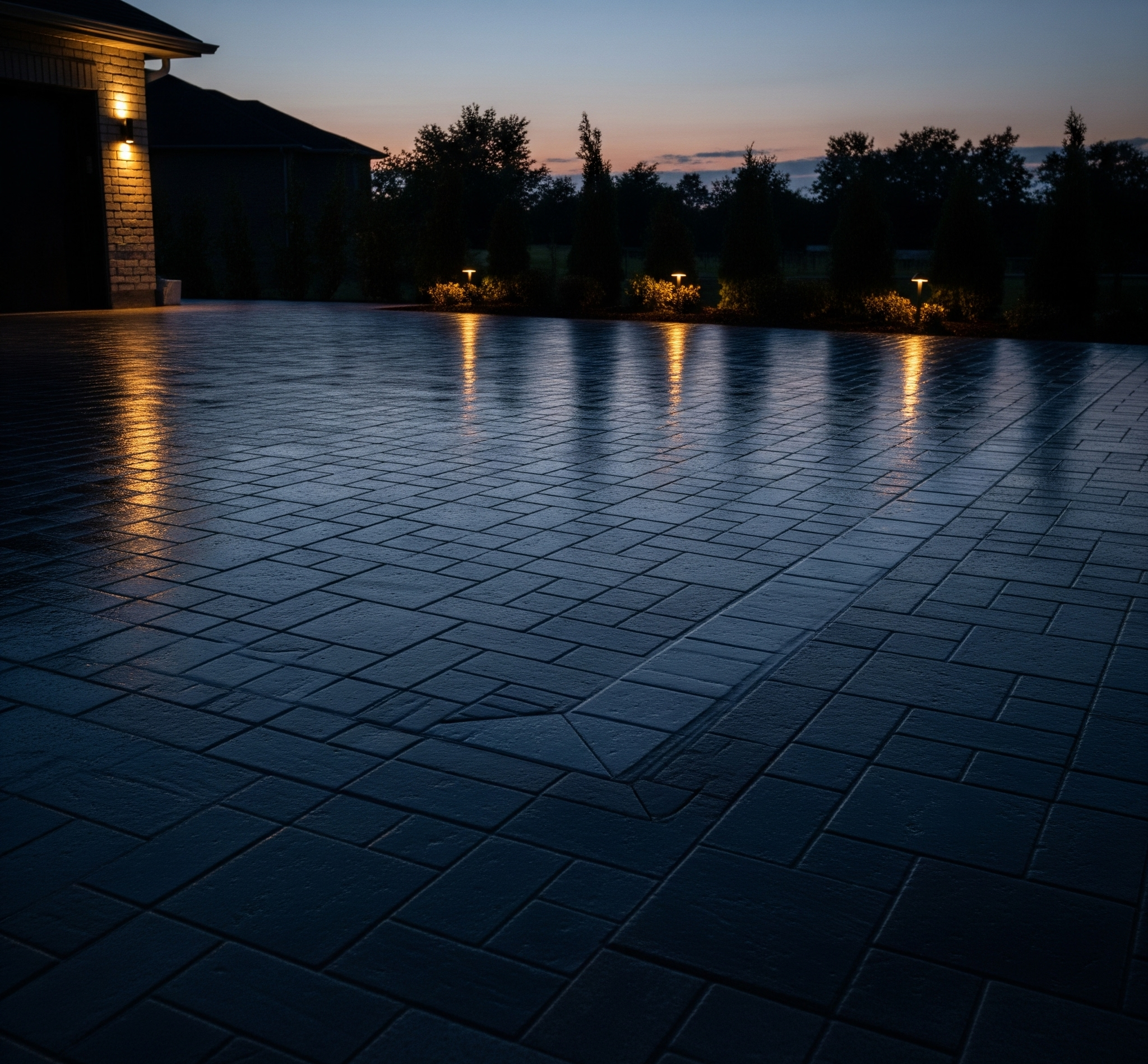
The Illusion of Fading
Here is the industry secret: 90% of the time, the concrete itself has not faded. The iron oxide pigments used to color concrete are derived from natural earth minerals. They are permanent. They do not bleach in the sun like fabric does. What you are seeing is the degradation of the Sealer.
The Science of Photodegradation
Acrylic sealers act like a clear coat of nail polish or car wax. They give the concrete its "wet look" and depth. However, under intense UV exposure, the molecular bonds in cheaper sealers break down. The clear coat turns cloudy, chalky, or milky. This microscopic layer of white degradation acts like a fog filter over your beautiful stamped pattern, muting the colors and making them look greyed out.
The Efflorescence Factor
Another culprit is Efflorescence. Concrete is porous. When moisture migrates up through the slab, it carries dissolved calcium salts to the surface. When the water evaporates, it leaves behind a stubborn white powder. This white haze sits on top of your dark slate or walnut color, making it look bleached. It's not fading; it's a mineral deposit masking the true color.
Integral Color vs. Topical Stains (The Contractor's Trap)
There is one scenario where concrete effectively "fades," and it is entirely avoidable.
Topical Stains (The Cheap Way): Budget contractors pour plain grey concrete and then spray a thin layer of dye on top. This color is only millimeters thick. When you drive your SUV over it daily and shovel snow off it, that thin layer wears away, revealing the ugly grey concrete underneath. This is "wear-off," not fading.
Integral Color (The Cinintiriks Way): We mix the high-grade pigment directly into the cement truck at the batch plant. The color is not painted on; it is part of the stone itself. If you chip a piece of our concrete, it is the same Charcoal or Sandstone color all the way through.
The Cinintiriks Approach: Engineering Color Fastness
We ensure permanent vibrancy through simple, uncompromising standards:
1. Premium Integral Pigments: Using UV-stable, synthetic iron oxides that are chemically inert.
2. High-Solids Solvent Sealers: We use breathable, solvent-based acrylics that resist UV breakdown far longer than water-based alternatives.
3. The "Magnifying Glass" Effect: By resealing every 2–3 years, we essentially replace the cloudy lens with a clear one. The moment the fresh sealer hits the concrete, the original color snaps back to life instantly.
"Concrete doesn't fade. Neglect fades. Maintenance restores."
Don't let cheap materials dull your property's curb appeal. Contact Cinintiriks for permanent integral coloring and professional UV-resistant sealing.
FAQ: Color Restoration
Can faded stamped concrete be restored?
Yes. If the sealer has turned milky or the surface is dull, we can chemically strip the old layers and apply a fresh coat of high-gloss sealer. Often, we add a tint to the sealer to rejuvenate the surface even further. It effectively looks brand new for a fraction of the replacement cost.
Why does my stamped driveway look faded when dry, but bright when it rains?
This is the classic sign that your concrete is perfectly healthy. When wet, the water fills the microscopic pores and refracts light, showing the true deep color. When it dries, the surface scatters light, looking dull. A fresh coat of sealer does exactly what the rain does—permanently.
Do darker stamped concrete colors fade faster than lighter ones?
Technically, no. The pigment is the same. However, chalking sealer or efflorescence shows up much more visibly against a dark charcoal or black background than it does against a light tan or grey. Darker driveways simply require slightly more diligent resealing to maintain that deep, rich look.
The Final Word
Your stamped concrete is an investment in permanent beauty. By choosing integral color from day one and committing to a simple reseal every few years, you guarantee that your driveway will look as stunning in 2040 as it does today.