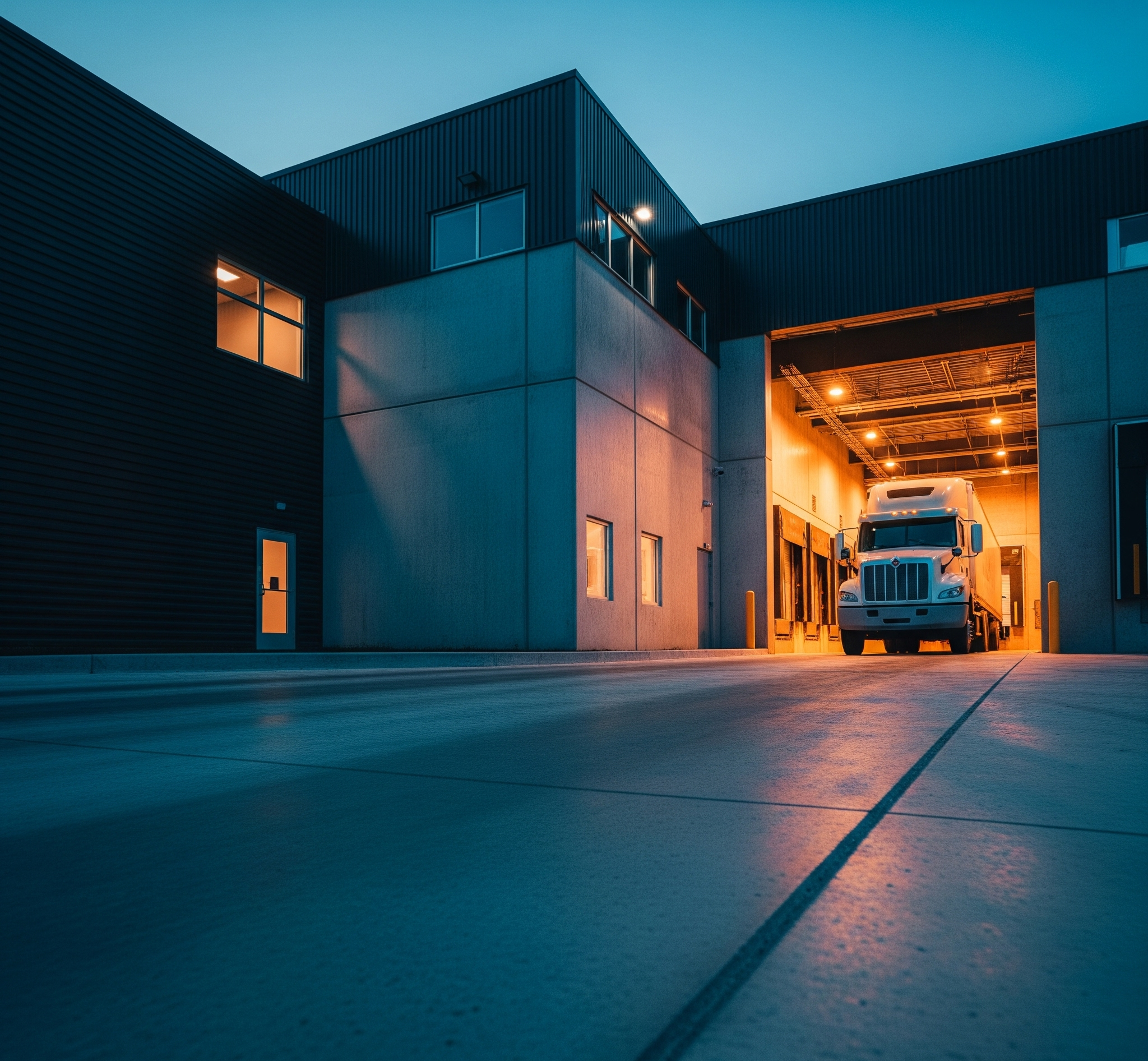
The Petrochemical Liability
Let us address the severe reality of industrial operations. When a transport truck blows a hydraulic line or a forklift leaks diesel fuel onto your pristine concrete or asphalt, that liquid does not passively sit on the surface. These are highly aggressive petrochemicals.
If your surface is asphalt, the situation is immediately critical. Asphalt is a petroleum-based product, held together by a bitumen binder. When diesel fuel or motor oil comes into contact with asphalt, it actively dissolves that binder. The chemical reaction literally melts the pavement, turning a solid structural surface back into loose gravel and soft tar. Within weeks, the constant weight of transport trucks will gouge massive, inescapable potholes into the softened area.
If your surface is commercial concrete, the threat is more insidious. Concrete acts like a dense, rigid sponge. It is fundamentally porous, riddled with microscopic capillaries. When hydraulic fluid hits concrete, it rapidly penetrates deep into the slab. It resists evaporation and refuses to be washed away by normal rain. Over time, this deeply embedded oil creates a permanent, slick film on the surface when wet, creating an extreme slip-and-fall hazard for your workers—a liability no Milton facility operator can afford to ignore. Furthermore, deep petrochemical stains permanently deface the property, drastically reducing its commercial lease or resale value.
The Engineering: Thermal Extraction & Chemical Surfactants
We must demystify the commercial cleaning process. There is a pervasive misconception that you can solve an oil spill by spraying a cold-water garden hose at it, or by tossing down a bag of cheap clay kitty litter and sweeping it up a week later. These amateur methods do absolutely nothing to extract oil that has penetrated a porous surface. They only smear the surface slick, leaving the deeply embedded hydrocarbons entirely intact.
To execute a true restoration, we must deploy commercial-grade heavy civil degreasing and chemical extraction. This requires highly engineered, truck-mounted thermal extraction units. We generate water heated to over 200°F (93°C), pressurized to precisely calculated PSI levels that are aggressive enough to scour the capillaries without spalling or etching the concrete surface itself. Hot water physically melts the viscous oils, making them mobile.
However, heat and pressure alone are insufficient. We pair our thermal extraction with heavy-duty, commercial-grade chemical surfactants. These engineered chemicals are specifically designed to physically break the hydrocarbon bonds deep within the pavement. The surfactants emulsify the oil—encapsulating the oil molecules and separating them from the concrete matrix. This floats the oil to the surface, allowing our high-volume vacuum recovery systems to instantly extract the contaminated wastewater, leaving the concrete microscopically clean and structurally sound.
The Permanent Defense: Oleophobic Penetrating Sealers
Extracting the oil is only the first half of the solution. To stop future damage from becoming a permanent liability, you must establish a permanent defense. This requires sealing the concrete immediately after the extraction and curing process is complete.
Standard hardware-store acrylic sealers are utterly useless in an industrial environment; they sit on the surface and are rapidly destroyed by forklift tires and chemical exposure. The absolute requirement for warehouse flooring restoration and loading dock protection is an industrial-grade, oil-repellent (oleophobic) penetrating sealer, specifically utilizing fluorocarbon-based polymers or advanced silane-siloxane blends fortified for oil resistance.
These engineered sealants do not form a film on top of the concrete. Instead, they penetrate deep into the microscopic pores and chemically bond with the silica in the concrete itself. By doing so, they fundamentally alter the surface tension of the slab. When future hydraulic fluid, motor oil, or diesel spills occur on a properly sealed Milton loading dock, the liquid cannot penetrate. It beads up harmlessly on the surface, just like water on a freshly waxed car. This allows your maintenance staff to simply wipe or mop up the spill hours later, with zero staining and zero structural degradation.
The Cinintiriks Approach
This brings us to "The Cinintiriks Standard." We are not a company that just washes driveways with a cold-water pressure washer. When you hire us, you are retaining a firm that understands the molecular chemistry of industrial contamination and the heavy civil engineering required to defeat it.
We execute surgical, heavy civil chemical extraction and molecular sealing specifically tailored for industrial projects in Milton and the broader GTA. We capture and reclaim all contaminated wastewater, ensuring your facility remains in strict compliance with municipal and provincial environmental regulations. We don't just clean stains; we protect your industrial assets from structural degradation, neutralize petrochemical slip-and-fall threats, and permanently elevate the operational standard of your property.
FAQ: Industrial Pavement Cleaning & Chemical Extraction
Why does diesel fuel literally melt holes into commercial asphalt paving?
Asphalt is composed of aggregate (stone and sand) held together by a petroleum-based binder called bitumen. Because diesel fuel, gasoline, and motor oil are also petroleum derivatives, they act as powerful solvents when they come into contact with the bitumen. The fuel physically breaks down and dissolves the chemical bonds of the binder. Once the binder is dissolved, the aggregate loses its cohesion, turning the solid pavement back into loose gravel. When heavy transport trucks drive over this compromised area, it rapidly disintegrates into a massive pothole.
How do professionals prevent oil and chemical runoff from entering Milton's municipal storm drains during extraction?
Environmental compliance is paramount. Allowing emulsified oil and chemical surfactants to flow into a municipal storm drain is illegal and carries severe environmental fines. Professional heavy civil extraction utilizes self-contained surface cleaners equipped with powerful vacuum recovery systems. As the thermal water and chemicals blast the surface, the vacuum immediately sucks up the contaminated wastewater before it can flow anywhere. We also utilize physical berms and drain blockers to completely isolate the work zone. The wastewater is pumped into holding tanks on our trucks and legally disposed of at approved environmental processing facilities.
How quickly does a hydraulic fluid spill need to be extracted before it permanently stains industrial concrete?
Speed is critical. Concrete is a porous material. While thick motor oil might sit on the surface for a short period, highly refined hydraulic fluids and diesel can penetrate the concrete matrix within minutes. If left untreated for a few days, the hydrocarbons can sink millimeters or even centimeters deep into the slab. Once it penetrates that deeply, complete 100% stain removal becomes exponentially more difficult, even with thermal extraction. To guarantee a perfect restoration, spills should ideally be addressed with chemical surfactants and extraction within 24 to 48 hours. If the concrete has been pre-treated with an oleophobic penetrating sealer, this window is drastically extended, as the fluid cannot penetrate the pores.
The Final Word
Don't let petrochemicals destroy your commercial infrastructure. Contact Cinintiriks for heavily engineered chemical extraction and industrial pavement sealing in Milton.