The Anatomy of a Stain: Why Scrubbing Fails
Concrete is not a solid rock; it is a rigid sponge. It is full of microscopic pores and capillaries. When a liquid hydrocarbon (oil, grease, transmission fluid) hits unsealed concrete, Capillary Action instantly pulls it deep below the surface.
This is why surface scrubbing fails. You are only cleaning the top millimeter of the slab. The oil is effectively hiding inside the concrete matrix, safe from your brush and soap. To remove it, you cannot just wash it off; you have to draw it out.
Triage: Dealing with a Fresh Spill
Time is your enemy. The longer the oil sits, the deeper it wicks. If the spill just happened:
1. Blot, Don't Rub: Use paper towels or shop rags to blot up the pooling liquid. Rubbing will only push the oil deeper into the pores and spread the stain wider.
2. The Dry Absorbent Method: Immediately cover the entire area with a thick layer of a dry absorbent material. Kitty litter is the common household fix, but for a luxury driveway in Mississauga, we recommend a specific oil-absorbing clay granules or even talcum powder. Let it sit for 24 hours. The powder acts as a wick, pulling the liquid oil out of the pores before it bonds.
Extraction: Treating Set-In Stains
If the stain has dried or is old, you need chemistry, not just physics.
The Alkaline Degreaser Method
Oil is acidic. To break its bond with the concrete, you need a high-pH (alkaline) degreaser. Apply it full strength, let it sit for 20 minutes to penetrate, and then scrub vigorously with a Stiff Nylon Brush. Do not use a wire brush; metal bristles will permanently scratch the surface texture of your concrete, leaving rust marks and scars.
The Poultice Method (For Deep Stains)
For stubborn oil that won't budge, you must create a Poultice. This is a paste made by mixing a solvent (like acetone or a specialized concrete cleaner) with an absorbent powder (like baking soda or talc) until it is the consistency of peanut butter.
- Spread the paste over the stain, about 1/4 inch thick.
- Cover it with plastic wrap and tape down the edges.
- Let it sit for 24 to 48 hours.
As the solvent dries, it absorbs into the concrete, dissolves the oil, and then wicked up into the powder. When you peel off the dried crust, the oil comes with it.
The Biological Method (Enzymatic Cleaners)
Science has given us a new tool: Bacteria. Enzymatic cleaners contain microorganisms that actually eat hydrocarbons. You pour it on, keep it moist, and over the course of a week, the bacteria consume the oil, converting it into harmless water and carbon dioxide. It is slow, but it cleans deep without harsh chemicals.
The Cinintiriks Standard: Prevention is the Only Cure
At Cinintiriks, we believe that scrubbing oil stains on your hands and knees is beneath the luxury experience. The only true solution is Sealing.
We apply a commercial-grade, deep-penetrating silane-siloxane sealer to every project. This creates a hydrophobic (water-repelling) and oleophobic (oil-repelling) barrier inside the pores. If a sealed driveway gets dripped on, the oil just sits on the surface, unable to penetrate. You simply wipe it away with a paper towel, disappearing without a trace.
"An unsealed driveway is a sponge waiting for a spill. A sealed driveway is a shield."
Stop fighting stains and start protecting your investment. Contact Cinintiriks for professional hardscape cleaning and commercial-grade sealing.
FAQ: Mythbusting
Can I just use a pressure washer to blast the oil away?
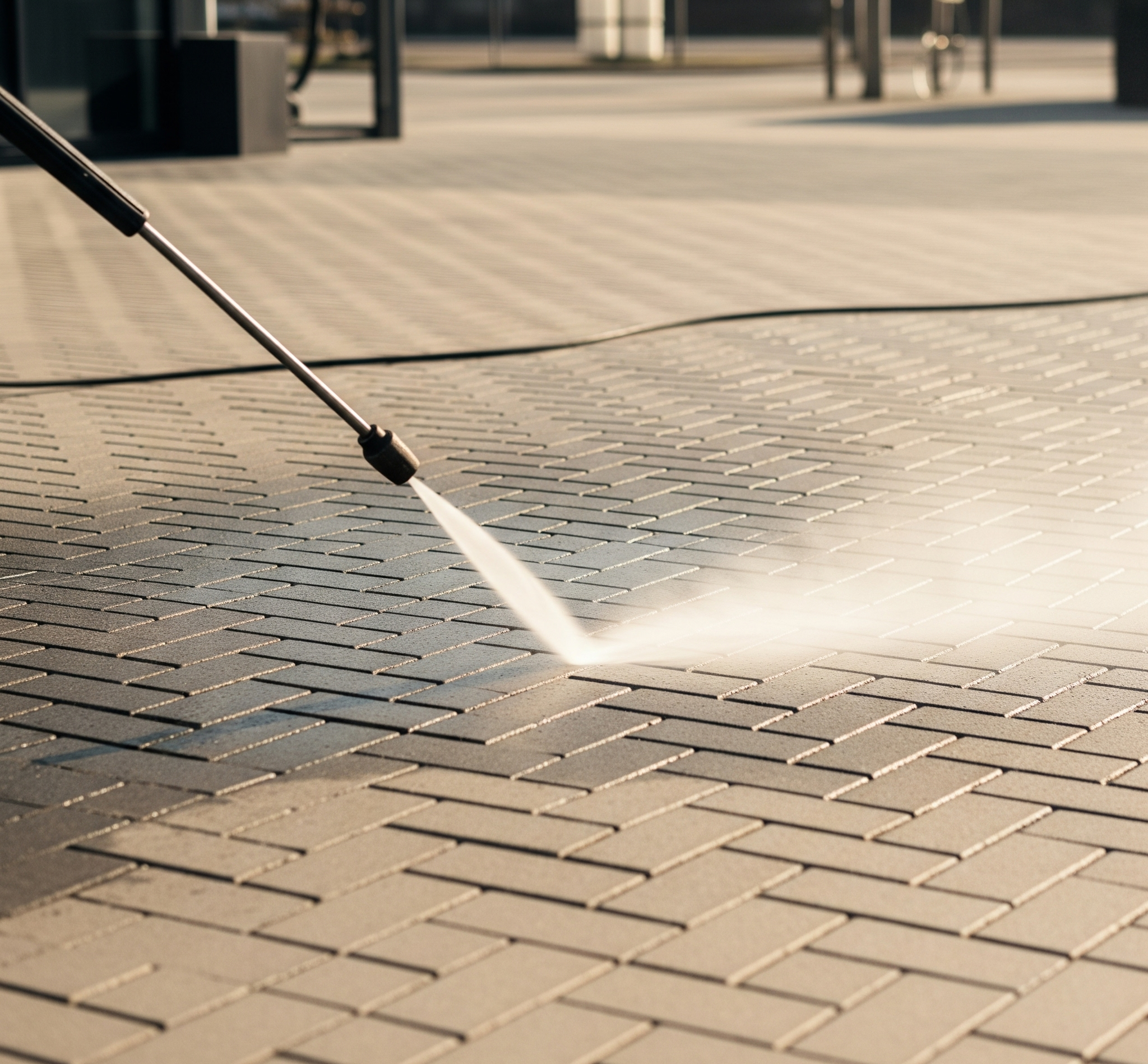
No. Water and oil do not mix. Blasting a fresh oil stain with cold, high-pressure water often just drives the oil deeper into the concrete's capillaries. You need a chemical agent to break the oil down first.
Will muriatic acid remove the oil stain?
Absolutely NOT. Acid dissolves cement paste; it does not dissolve oil. Pouring acid on an oil stain will just eat away the surface of your concrete, revealing the aggregate, while the oil stain remains untouched. You will ruin the finish permanently.
Does dish soap actually work?
On a fresh, minor spill? Yes, it can break the surface tension. On a set-in stain? No. Dish soap is designed for food grease on non-porous plates, not heavy motor oil inside porous concrete.
The Final Word
If you have a stain, treat it immediately. But ask yourself: do you want to do this every time a delivery truck arrives? Sealing is not an upsell; it is the insurance policy for your hardscaping. Protect your investment before the next drop falls.