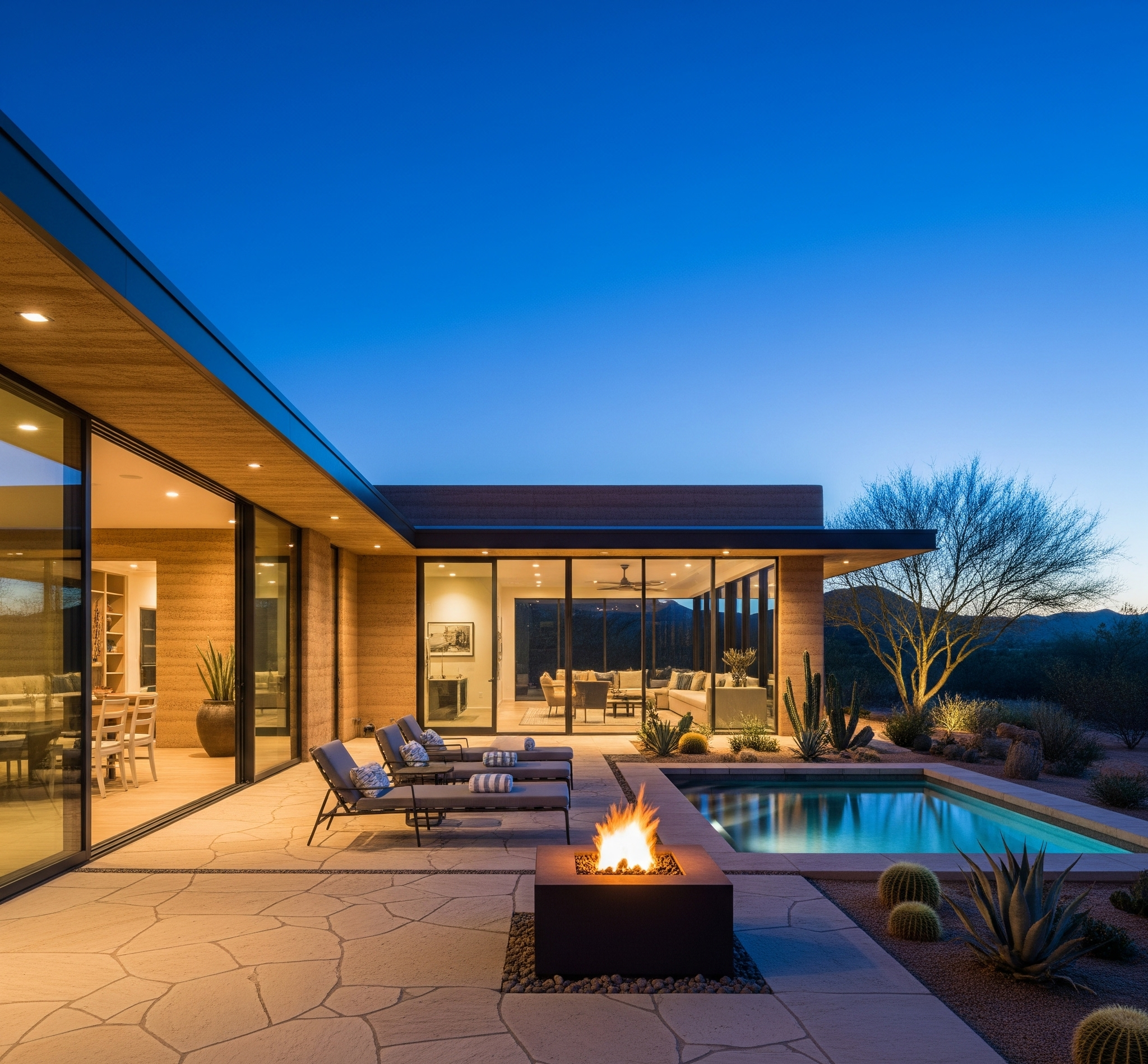
Here is the reality: a complete luxury backyard living space of that calibre—properly engineered, premium materials, built to last 30 years in Ontario’s climate—is a $80,000 to $250,000+ investment depending on scope, site conditions, and finish level. Very few homeowners write a single cheque for the full scope. And frankly, very few should.
Phasing a luxury backyard project across multiple construction seasons is not a compromise. It is, when done correctly, the smartest possible approach to building a high-end outdoor living environment. It spreads the financial commitment across two or three budget years. It allows you to live with each phase, understand how you actually use the space, and refine subsequent phases based on real experience rather than guesswork. And it means you are not living in a full-scale construction zone for four consecutive months while excavators, concrete trucks, and material deliveries consume your entire property.
But here is the part that most homeowners—and, honestly, most contractors—get catastrophically wrong: phasing is not the same as improvising. You cannot build a patio this year and then decide next year you want a gas fire pit in the middle of it. You cannot install a beautiful interlocking paver surface in year one and then rip it apart in year two to run the electrical conduit you forgot to bury. You cannot plant a $3,000 specimen Japanese Maple in a location where, next season, a skid-steer needs to drive to deliver aggregate for your retaining wall.
Phasing a luxury backyard project without a comprehensive master plan is not saving money. It is guaranteeing that you will spend more—tearing out work to redo it, patching surfaces that never quite match, and paying mobilisation costs for equipment that should have been on-site once, not three times.
This guide is the master plan behind the master plan. It explains exactly how to sequence a multi-season luxury backyard build so that every phase is usable, every dollar is efficiently spent, and every hidden pipe, wire, and conduit is positioned perfectly for the final reveal.
The Master Plan: Design Everything. Build in Phases.
The single most important principle of multi-season phasing is deceptively simple: design the entire project before you build any of it.
This does not mean you need to commit to building (or paying for) the entire project upfront. It means you need a complete design document—a scaled site plan showing every feature, every grade change, every utility run, every planting bed, and every hardscape zone in the ultimate finished state—before the first shovel breaks ground on Phase 1.
Why? Because construction is not reversible. Once concrete is poured, pavers are laid, and retaining walls are built, modifying them is demolition. And demolition of recently installed luxury hardscaping is the most expensive, wasteful, and demoralising outcome in residential construction. Every dollar you spend on comprehensive upfront design saves five to ten dollars in avoided tear-outs, rework, and improvised “make it fit” compromises during subsequent phases.
The master plan must address, at minimum:
- Final grading and drainage design: Where does water go in the finished state? Every grade, every slope, every catch basin, and every drainage channel must be designed for the ultimate configuration, even if some elements are not installed until Phase 3. If you grade for Phase 1 only, you may discover in Phase 2 that the grades conflict and water pools against a feature that did not exist when the original grading was designed
- All underground utility routes: Gas lines, electrical conduits, low-voltage lighting wire runs, plumbing for outdoor sinks and beverage centres, irrigation mainlines. Every single buried service must be mapped in the master plan and installed during Phase 1, even if the appliances and fixtures they serve are not connected until Phase 2 or 3
- Structural foundation requirements: Retaining wall footings, pergola post foundations, outdoor kitchen slab foundations, and step/stair substructures must all be designed at the master plan stage because they dictate excavation depths, concrete volumes, and reinforcement layouts that must be coordinated with the Phase 1 earthwork
- Material palette and supplier selection: The paver colour, the natural stone species, the concrete finish, and the wood/composite decking colour must be selected during the master plan phase and documented with manufacturer product codes. If you choose a paver colour in Phase 1 and the manufacturer discontinues it before Phase 2, you have a permanent colour mismatch on your property. Selecting from core production colours (not limited-run specialty colours) from established Canadian manufacturers (Unilock, Oaks, Permacon, Techo-Bloc) mitigates this risk
In Ajax, where residential lots along the lake (south of Highway 401, particularly in the Pickering Beach and Ajax waterfront neighbourhoods) often include significant grade changes from the street to the rear property line, the master plan must also account for soil conditions and drainage patterns specific to the Durham Region lakeshore. The clay-heavy soils common in these areas drain poorly, which means drainage infrastructure must be oversized compared to properties on well-drained sandy loam. Discovering this in Phase 2 after Phase 1 grading is complete is a costly surprise that a proper master plan eliminates entirely.
"We design the finished backyard first. Then we reverse-engineer the construction sequence. Every phase is a complete chapter—usable, beautiful, and perfectly positioned for the next one."
Phase 1: The Heavy Civil Foundation
Phase 1 is the phase that nobody photographs for the portfolio. It is excavators, dump trucks, compactors, and trenchers. It is dirt, aggregate, geotextile fabric, and PVC conduit. It is loud, dusty, and visually unimpressive. And it is, without any exaggeration, the most important phase of the entire project.
There is a rule in construction that explains why: “first in, last out.” The first things installed are the deepest, most buried, and most difficult to access once subsequent layers are placed on top of them. If you forget a gas line in Phase 1, you cannot install it in Phase 2 without destroying the patio you just built on top of it. If you undersize the drainage in Phase 1, you cannot fix it in Phase 3 without excavating through every finished surface above it. The buried infrastructure must be right the first time because there is no economically viable way to correct it after the fact.
What Phase 1 Must Include (Non-Negotiable)
- Full site excavation to final grade: The entire project area—not just the Phase 1 build area—is excavated to the designed sub-grade elevation. This means removing all organic topsoil, cutting or filling to the engineered grades, and establishing the drainage slopes that will govern the finished surface for the life of the project. Excavating the full site in Phase 1 means the heavy machinery (excavators, skid-steers, compactors) is on-site once, mobilised and demobilised once, and the most disruptive phase of construction is consolidated into a single window rather than repeated across multiple years
- Structural retaining walls and footings: Any retaining wall, structural step, or grade-transition structure in the master plan must be built in Phase 1. Retaining walls require deep footings (minimum 1200mm below finished grade in Ontario to clear the frost line), extensive excavation behind the wall for drainage stone and geotextile, and compacted backfill. This work cannot be done efficiently or safely adjacent to a finished patio or planting bed. It requires clear access for heavy equipment and generates significant spoil material that must be trucked off-site
- Primary drainage infrastructure: Catch basins, French drains, channel drains, and all primary drainage pipe runs connected to the municipal storm sewer (where permitted) or to on-site infiltration galleries. In Ajax, connections to the municipal storm sewer typically require approval from the Region of Durham, and the drainage design must demonstrate compliance with the municipality’s stormwater management policies. This approval process takes time—another reason to address drainage in Phase 1 rather than discovering the requirement in a later phase
- All future utility conduits: This is where most
DIY phasing plans fail catastrophically. Every buried utility
that will serve any future phase must be installed
during Phase 1 excavation:
- Gas line: A licensed gas fitter runs a dedicated gas line from the house meter to the future fire pit location and the future outdoor kitchen location, capped and pressure-tested, buried 450mm minimum below finished grade. Cost in Phase 1: approximately $1,500-$3,000 per run. Cost to retrofit in Phase 3 after the patio is built: $8,000-$15,000+ including patio demolition and reinstallation
- Electrical conduit: Rigid PVC conduit (typically 25mm and 50mm diameter) run from the electrical panel to the future outdoor kitchen location (for 240V appliances), the future pergola/pavilion location (for ceiling fans, heaters, and receptacles), and a junction box network for low-voltage landscape lighting transformers. The conduit is installed empty—the wire is pulled through later when the features are ready for connection. Cost in Phase 1: approximately $800-$2,500 for conduit runs. Cost to retrofit: excavation through finished hardscape, which typically costs 5-10x the original conduit installation
- Plumbing: If the master plan includes an outdoor sink, beverage centre with drain, or any water feature requiring a supply and return line, the supply and waste lines are run in Phase 1 from the house connection to the feature location, insulated and buried below the frost line, with accessible shut-off valves at the house side for winterisation
- Irrigation mainline: If the softscaping plan includes an irrigation system (and for a luxury property, it should), the mainline from the house water supply is run during Phase 1 excavation with capped branch connections at each future irrigation zone. The zone heads and controllers are installed with the softscaping in Phase 3
- Granular sub-base installation: The compacted granular base (Granular A and/or clear crushed stone, depending on the drainage design) is placed and compacted across the entire project area during Phase 1. Each lift is compacted to a minimum 95% Standard Proctor density. The sub-base is the structural foundation for every paver, every concrete slab, and every stone feature that will be placed on top of it in subsequent phases. Compacting the full sub-base in Phase 1 ensures uniform density and settlement behaviour across the entire project, eliminating the differential settlement that occurs when sub-bases are compacted at different times with different moisture conditions
When Phase 1 is complete, your Ajax backyard will not look like a magazine spread. It will look like a precisely graded, well-compacted gravel pad with conduit stubs poking out of the ground at strategic locations. It will not be pretty. But it will be perfectly engineered, and every subsequent phase will build on top of it without having to touch it, modify it, or tear any of it apart.
Phase 2: The Primary Hardscape and Structure
Phase 2 is where the transformation begins to become visible. This is the phase that homeowners get excited about, because the heavy, dirty civil work is done, and the aesthetic elements start taking shape.
The Primary Entertaining Surface
The main patio surface—whether interlocking pavers, poured concrete, or natural stone—is installed in Phase 2. The sub-base is already in place from Phase 1. The bedding layer (typically 25mm of HPB or manufactured screening sand) is placed and screeded to the exact design elevations, and the paver field is laid according to the master plan layout.
On properties in Ajax, where rear yards facing Lake Ontario often feature spectacular south-facing sun exposure, the patio layout in Phase 2 typically prioritises the primary entertaining zone with the best solar orientation. This is the zone where the outdoor dining table goes, where the lounge seating goes, and where the family will spend 80% of their outdoor time. Getting this zone installed and usable in Phase 2 means you are enjoying your backyard during the project, not waiting three years for the entire build to finish before you sit outside.
Structural Shade and Shelter
Pergolas, pavilions, and shade structures are Phase 2 elements because they require structural post foundations (typically sonotubes poured to the frost line—1200mm minimum in Ontario) and their footprint must be coordinated with the paver layout. The post foundations are often poured during the Phase 1 earthwork, but the above-grade structure (posts, beams, rafters, and roofing if applicable) is installed in Phase 2 after the patio surface is in place.
This sequencing matters because the patio surface must be laid around the post locations, with precise cuts and border details that integrate the posts into the paver field. If the pergola is an afterthought added in Phase 3, the post foundations must be drilled through the finished patio surface—which means cutting pavers, disturbing compacted bedding, and creating a patched, retrofitted appearance that never looks as clean as an integrated installation.
Structural Outdoor Kitchen Shell
If the master plan includes an outdoor kitchen, the structural shell (the masonry or steel-framed cabinet base, the countertop support structure, and the rough plumbing and gas connections) is typically built in Phase 2. The gas and electrical conduits are already in place from Phase 1—they just need to be connected to the kitchen shell. The appliances (grill, side burners, refrigeration, sinks) can be installed immediately in Phase 2 or deferred to Phase 3, depending on budget. The shell and the utility connections are the expensive, disruptive parts. The appliances drop in without any construction impact.
When Phase 2 is complete, your property has a fully usable primary entertaining space. Patio surface, shade structure, outdoor kitchen shell (and possibly appliances). You are hosting dinners, grilling, and enjoying the space. The property is clean and accessible. There is no construction debris, no excavation trenches, no heavy machinery access corridors cutting through your yard. Phase 2 transforms the gravel pad of Phase 1 into a living space—not a finished one yet, but a genuinely enjoyable one.
"After Phase 2, every homeowner says the same thing: ‘We should have done this years ago.’ And after Phase 3, they say: ‘We are never leaving this backyard.’"
Phase 3: The Finishing Layer
Phase 3 is the phase that elevates your backyard from “very nice” to “this belongs in a design magazine.” It is the layer of refinement, detail, and sensory richness that makes a luxury outdoor space feel premium, not just look it.
Fire Features
The gas fire pit, the fire table, or the linear fire trough is connected and commissioned in Phase 3. The gas line has been sitting capped and pressure-tested beneath the patio since Phase 1. The fire feature is placed on its prepared pad (built into the Phase 2 patio layout), the gas fitter connects the supply, and you have a fire feature that looks like it has always been part of the design—because it has. It was in the master plan from day one. The gas line was run the moment earthwork began. There is no retrofitting, no patio demolition, no “we had to cut a trench to get the gas over here” compromises.
Mature Softscaping and Planting
Trees, ornamental shrubs, perennial beds, and decorative groundcovers are installed in Phase 3—and specifically not in Phase 1 or Phase 2. This is not about budget deferral (although it helps). It is about plant survival. Mature caliper trees (50-75mm caliper specimens representing a $1,500-$5,000+ investment per tree) are sensitive to soil compaction, root disturbance, and construction-related soil contamination (concrete washout, fuel spills, aggregate dust). Installing a $3,000 specimen sugar maple in Phase 1 and then driving a skid-steer past it twelve times during Phase 2 compacts the root zone, damages the trunk, and frequently kills the tree within two seasons.
By deferring all premium plant material to Phase 3, after all heavy construction is complete and all equipment has left the site, you are planting into undisturbed, properly prepared soil with no risk of mechanical damage. The planting beds receive fresh triple-mix topsoil, the irrigation zones (whose mainlines were run in Phase 1) are connected and commissioned, and every tree, shrub, and perennial goes into the ground in its final location with the best possible chance of long-term survival.
In Ajax, where the growing season is modestly longer than inland GTA locations due to Lake Ontario’s moderating effect on early and late-season temperatures, Phase 3 planting can often be extended into late October for deciduous trees and early November for evergreens—a window that is typically closed by mid-October for properties further north in the GTA. This extended window is a genuine advantage for Ajax homeowners staging their projects across seasons, as it provides more scheduling flexibility for the final softscaping phase.
Architectural Landscape Lighting
Low-voltage LED landscape lighting is the single most transformative element in a luxury outdoor space, and it is the last thing installed. The low-voltage wire runs (whose conduits were installed in Phase 1) are pulled, the transformer is mounted and connected to the junction box installed during Phase 1 electrical work, and the individual fixtures—path lights, up-lights on specimen trees, step lights integrated into retaining walls, undercap lighting on wall caps, and ambient string lighting on the pergola—are positioned with precision.
Lighting is a Phase 3 element because effective landscape lighting design requires the finished landscape as context. You cannot design lighting for trees that have not been planted, walls that have not been capped, or planting beds that have not been shaped. The lighting designer needs to see the finished grade, the final plant positions, and the actual shadow patterns created by the built structures before specifying fixture types, beam spreads, and brightness levels. Installing lighting in Phase 2 and then adding trees and structures in Phase 3 means the lighting will need to be repositioned—an unnecessary rework cost.
When Phase 3 is complete, your Ajax property has a fully realised luxury outdoor living environment. The patio flows into the planting beds. The fire feature anchors the evening entertaining zone. The mature trees provide immediate canopy. The lighting transforms the space at dusk into something that feels like a high-end resort. And critically, every element looks like it was installed at the same time as part of a single, unified design—because it was designed at the same time. The construction was phased. The vision never was.
The Cinintiriks Approach: Engineered Phasing, Not Improvised Phasing
At Cinintiriks, we do not sell phases. We sell master plans with built-in phase gates. Every luxury backyard project we design—whether it is built in a single season or across three—begins with the same comprehensive design process:
The Cinintiriks Standard: Multi-Season Master Planning
1. Complete Design Before Construction: We produce a fully detailed, scaled master plan showing every feature in the ultimate finished state, including all grading, drainage, utility routing, material specifications, and planting design. This plan is the reference document for every phase. It eliminates surprises, prevents conflicts between phases, and ensures that Phase 3 elements (like landscape lighting wire runs) are accommodated in Phase 1 earthwork—before the ground is covered by Phase 2 hardscaping.
2. Phase-Gate Budgeting: Each phase is individually priced with a fixed-scope contract so you know exactly what you are spending in each construction season. There are no open-ended allowances, no “we will figure it out when we get there” pricing, and no hidden costs for utility connections that should have been included in a previous phase. The total master plan cost is established upfront. The phase-gate structure simply distributes it across your preferred timeline.
3. Phase 1 Utility Pre-Installation: On every phased project, we install all future utility conduits (gas, electrical, plumbing, irrigation, low-voltage lighting) during Phase 1 earthwork, regardless of which phase the served feature belongs to. The incremental cost of burying a capped gas line and electrical conduit during open-trench excavation is a fraction of the cost of retrofitting them under a finished patio. This is the single most valuable engineering decision in multi-season phasing, and it is non-negotiable on every Cinintiriks project.
4. Liveable Between Phases: We design each phase boundary so that the property is clean, safe, and genuinely usable between construction seasons. Phase 1 concludes with a properly graded, compacted surface that drains correctly and can be walked on safely. Phase 2 concludes with a finished entertaining space. There are no “construction-zone winters” where your backyard is an unusable mud pit. Each phase conclusion is a deliberate milestone, not an arbitrary stopping point.
5. Material Continuity Guarantee: When we specify materials in the master plan, we select from core production lines of established Canadian manufacturers. We document exact product codes, colour codes, and lot specifications. For multi-season projects, we recommend that clients purchase and store a 5-10% overage of the Phase 2 paver order for use in Phase 3 touch-ups, repairs, and integration zones. This ensures perfect colour matching across phases, even if the manufacturer adjusts pigment formulations between production years.
6. Single-Source Accountability: Because Cinintiriks designs and executes every phase in-house—excavation, concrete, interlocking pavers, retaining walls, plumbing, electrical coordination, planting, lighting—there is a single point of accountability across the entire multi-season build. There is no finger-pointing between the “Phase 1 contractor” and the “Phase 2 contractor.” If a utility conduit installed in Phase 1 is not in the right location for the Phase 2 kitchen connection, we fix it, because we installed it. This continuity of responsibility is the structural advantage of working with a single firm across all phases.
Stop guessing at your backyard sequence and wasting money on tear-outs. Contact Cinintiriks for a heavily engineered, multi-season master plan for your Ajax property.
FAQ: Multi-Season Backyard Project Phasing
Can I add an outdoor kitchen or fire feature to an existing patio if I didn’t run gas lines first?
You can, but it will cost significantly more than it would have if the gas line had been installed during original construction. Adding a gas line to an existing patio requires one of two approaches: (1) trenching through the patio surface, which means cutting and removing a strip of pavers or sawcutting a channel through poured concrete, excavating to the required burial depth (450mm minimum for gas lines in Ontario), running the line, backfilling, re-compacting, and reinstalling the surface material. This produces a visible repair line that rarely matches the original surface perfectly. Or (2) routing the gas line around the patio perimeter, which avoids disturbing the surface but requires a longer pipe run, additional fittings, and may necessitate routing through planting beds or along the house foundation. Either approach typically costs $8,000-$15,000 compared to the $1,500-$3,000 it would have cost to run the line during original excavation. The lesson: if there is even a possibility that you might want a gas fire feature or outdoor kitchen in the future, run the gas line now and cap it. The incremental cost during open-trench construction is negligible. The retrofit cost after the patio is built is substantial.
How long should I wait between completing the hardscaping and planting mature trees?
Ideally, one full season. Completing the hardscaping (patio, retaining walls, outdoor kitchen shell) in the spring/summer of Year 1 and planting in the spring of Year 2 provides several advantages. First, it allows the compacted sub-base and backfill behind retaining walls to go through a full freeze-thaw cycle and settle naturally before planting beds are established on top of them. If you plant immediately after construction, the soil settlement that occurs during the first winter can expose root balls, create low spots that pool water, and shift the grade away from the design intent. Second, it gives you a full season to observe actual sunlight patterns, wind exposure, and moisture conditions on the finished site before committing to specific tree species and planting locations. A location that appears sunny at the design stage might be significantly shaded by the new pergola structure built in Phase 2—which would change the species selection from a sun-loving ornamental (like a Japanese Maple in full sun) to a shade-tolerant species (like a Serviceberry or Redbud). That said, if the project timeline requires same-season planting, it can be done successfully as long as the planting beds receive fresh, uncompacted topsoil (never plant into construction-compacted subsoil), the irrigation system is operational, and the planting is completed at least 6-8 weeks before the first hard frost to allow root establishment. In Ajax’s lakeside microclimate, this typically means planting by mid-to-late October for deciduous species.
Does breaking a luxury landscaping project into multiple phases end up costing more overall?
It can, but it does not have to—and when phased correctly, the total cost premium is modest and far outweighed by the financial and practical benefits. The primary cost increases in a phased project are: (1) Multiple mobilisations: bringing equipment and crews to the site 2-3 times instead of once adds approximately $2,000-$5,000 per additional mobilisation (equipment delivery, site setup, temporary access protection). (2) Temporary finishes: completing Phase 1 in a “liveable” condition (grading, temporary seed or gravel on unpaved areas) adds modest cost that would not exist in a single-season build. (3) Material price escalation: paver and concrete prices in Ontario have increased 3-7% annually in recent years, so Phase 3 materials purchased two years after Phase 1 will cost somewhat more than if everything had been purchased at once. Against these modest premiums, phasing provides: the ability to spread $100,000-$250,000+ of investment across 2-3 budget years instead of committing it all at once; the opportunity to enjoy the space during construction rather than waiting 4-5 months for a single-season mega-build to complete; and the flexibility to adjust later phases based on how you actually use the space after Phase 2 is complete. On a well-planned Cinintiriks phased project, the total cost premium for phasing is typically 5-10% over a single-season build—a modest premium for dramatically improved cash flow, usability, and design refinement. The scenario where phasing becomes genuinely expensive is when it is done without a master plan—when Phase 1 is built without knowledge of Phase 2 requirements, and tear-outs, rework, and utility retrofits consume 20-40% of the Phase 2 budget correcting Phase 1 oversights. That is not phasing. That is improvising. And it is the single most expensive mistake in residential landscaping.
The Final Word
Staging a luxury backyard living project over multiple seasons is not about building less each year. It is about building the right things in the right order. Heavy civil work and all buried utilities first. Primary hardscape and structure second. Finishing elements, softscaping, and lighting last.
The master plan makes this possible. Without it, you are guessing. And in residential construction, guessing is expensive.
With a Cinintiriks master plan, every phase is a chapter in a single story. Each one is usable, each one is beautiful, and each one sets the stage perfectly for the next. When the final fixture is lit and the last tree is planted, the finished space looks like it was built in a single, seamless construction season—because it was designed in a single, seamless design session. The construction was phased. The vision never was.
That is The Cinintiriks Standard. Not improvised. Not guessed. Engineered.