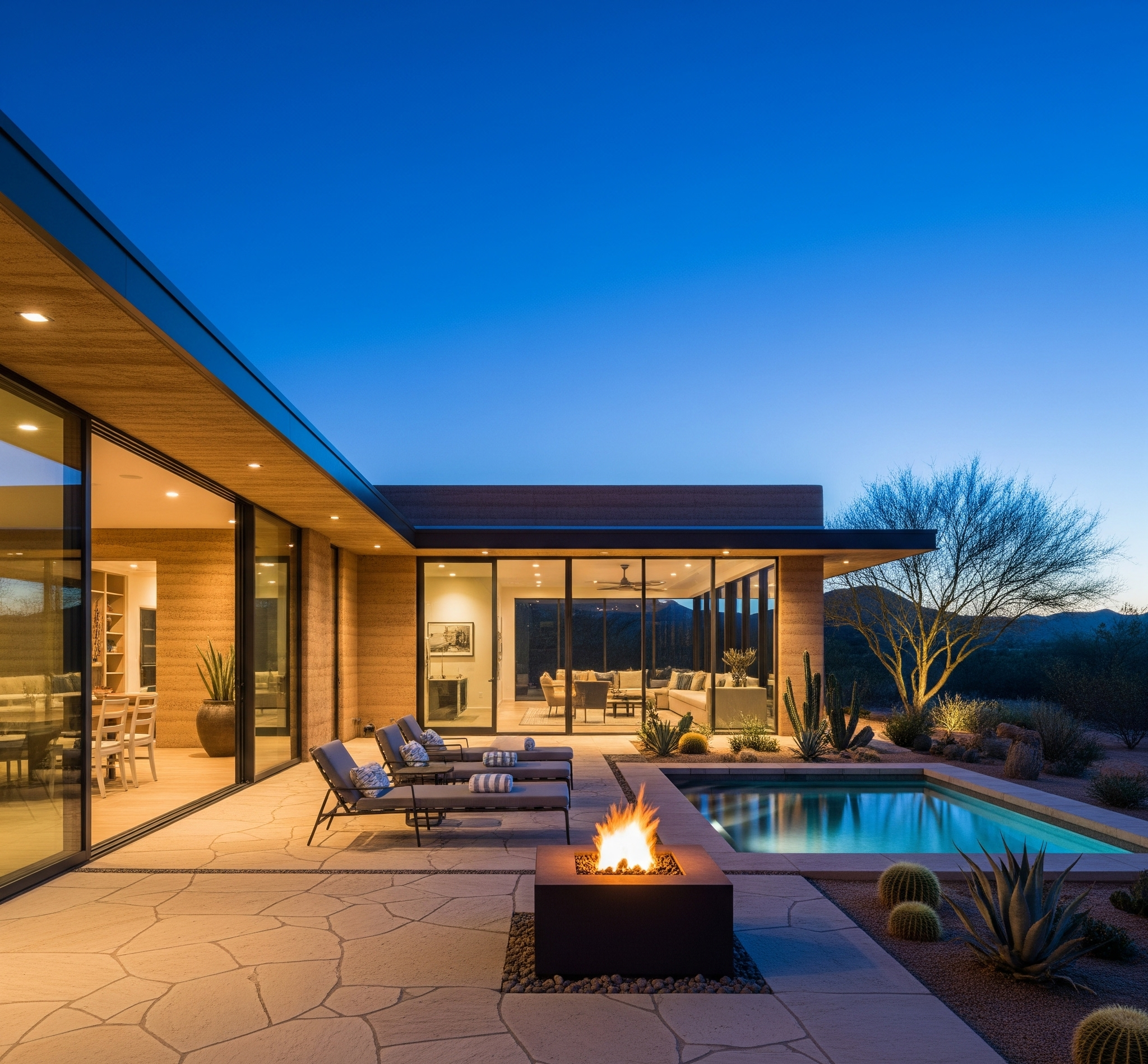
Designing and building a luxury aquatic hardscape requires an immense capital investment. Discerning homeowners across the Greater Toronto Area frequently invest hundreds of thousands of dollars into massive, free-form interlocking paver decks, natural stone coping, and sophisticated infinity edges. However, the true test of this investment does not occur during the blazing heat of a July pool party; it occurs in the dead of February. The Canadian winter is violently unforgiving. If you simply close your pool, pull the cover over the water, and ignore the surrounding hardscape, you are actively inviting structural catastrophe. To protect interlocking pavers winter GTA style, you must stop treating your pool deck like a static decoration and begin treating it as highly vulnerable heavy civil infrastructure that requires aggressive molecular protection and surgical winterization.
The Deep Freeze Threat: Why Unprotected Pool Decks Fracture
To fully grasp the necessity of winterization, you must first understand the brutal vulnerability of the aquatic environment. A pool deck is not like a standard front walkway. The hardscape immediately surrounding a pool is in a constant state of bombardment. Throughout the summer, it is continuously splashed with massive volumes of heavily chlorinated water or corrosive saline from salt-water generators. It absorbs sunscreen oils, biological matter, and microscopic organic debris.
Crucially, all hardscaping materials—whether they are high-density interlocking concrete pavers, poured monolithic slabs, or premium natural flagstone—are inherently porous. They are riddled with microscopic capillary networks. When splashed, the pool water, along with its dissolved salts and chemicals, wicks deeply down into these invisible pores. Over the summer, this moisture builds up within the core of the stone.
When the Brampton winter finally hits and the ambient temperature rapidly plummets below zero, the physics of freeze-thaw hardscape damage activate. Any moisture remaining trapped within the microscopic pores of the pavers violently transitions from a liquid to a solid state. As water freezes, it expands by exactly 9% in volume. Inside a confined microscopic pore, this 9% expansion generates a highly localized internal hydraulic pressure that can easily exceed 30,000 pounds per square inch.
If the pool deck is unprotected and fully saturated, this immense internal pressure will completely overwhelm the tensile strength of the concrete or natural stone. The surface will begin to literally blow itself apart from the inside out. You will witness catastrophic "spalling," where entire layers of the paver face flake off, exposing the rough aggregate underneath. In severe cases, the expansion force will violently fracture and shatter entire stones, transforming your multimillion-dollar luxury oasis into a crumbling, structural liability before spring even arrives.
Molecular Armor: Penetrating Sealers vs. The Freeze-Thaw Cycle
Defeating the freeze-thaw cycle requires advanced chemical defense mechanisms. You cannot simply cover the deck with a tarp. You must fundamentally alter the molecular structure of the stone's surface to prevent water ingress in the first place.
However, before any protection can be applied, the surface must be surgically prepared. A premium winterize pool deck Brampton protocol begins with high-temperature, commercial-grade thermal extraction. We utilize highly calibrated, 200-degree hot-water pressure systems paired with specialized rotary surface cleaners. This extreme heat physically melts and extracts the accumulated summer suntan oils, deep-seated organic algae, and deeply embedded chlorine or salt residues. If you attempt to seal over these contaminants, they will become permanently locked into the stone, causing severe discoloration and destroying the chemical bond of the sealer.
Once the stone is flawlessly clean and completely dry, the molecular armor is deployed. For aquatic environments, standard "wet-look" acrylic film-forming sealers (which sit on top of the stone like a cheap paint) are often inadequate and dangerously slippery when wet. Instead, we mandate the application of industrial-grade, deep-penetrating silane or siloxane molecular sealers to effectively seal concrete pool patio Ontario surfaces.
These advanced sealants do not create a film on the surface. Instead, the microscopic silane/siloxane molecules penetrate deeply into the capillary pores of the concrete or natural stone. Once inside, they chemically react with the silica and alkaline compounds within the stone, permanently bonding to the pore walls. This chemical reaction completely waterproofs the internal structure, violently repelling any future water ingress. Because the pores are now hydrophobic, water cannot penetrate to freeze and expand.
Crucially, because the sealant bonds to the *walls* of the pores rather than plugging them entirely, the stone remains 100% breathable. Any subterranean moisture or trapped ground vapor can safely evaporate up and escape through the surface without blowing the sealer off, ensuring the long-term structural integrity of the entire deck.
Evacuating Surface Water: Securing Coping and Trench Drains
Applying molecular armor is only half the battle. A sealed paver is virtually indestructible, but it is ultimately useless if the overall hydrology of the deck forces water to pool aggressively against the pool's structural coping or the surrounding foundations.
Pool coping winterization and drainage management are physical mechanics that require meticulous autumn maintenance. Luxury pools are frequently designed with sleek, linear trench drains integrated flush into the deck to evacuate splash-out. During the fall, these incredibly narrow drains become rapidly choked with decaying leaves, pine needles, and silt. If a trench drain freezes solid while full of debris, it will shatter the surrounding concrete. Every drain must be opened, vacuumed entirely clean, and flushed to ensure it is running perfectly clear before the first frost.
Furthermore, the physical barrier between the pavers must be secured. The joints between the stones are filled with highly specialized polymeric sand, which creates a flexible, impermeable matrix that sheets water toward the drains. Over a heavy summer of use, this sand can wash out or crack. A critical part of winterization is inspecting every inch of the jointing sand. Any failing joints must be mechanically removed and repacked with fresh polymeric sand to ensure water cannot penetrate down to the sensitive gravel sub-base.
Finally, we inspect the critical expansion joint—the flexible mastic bead separating the pool's rigid concrete shell from the interlocking deck. If this joint is compromised, melting snow will pour directly down the side of the pool shell. When it freezes, it will create massive frost heave, actively pushing the deck up and physically crushing the pool's retaining walls.
The Cinintiriks Winterization Standard: Securing Your Luxury Oasis
At Cinintiriks, we understand that luxury backyard maintenance is not a landscaping chore; it is an act of asset protection. This is The Cinintiriks Standard. We execute surgical, heavy civil hardscape protection specifically tailored to the extreme demands of the Brampton climate.
We don't just sweep your patio and wish you luck for the winter. Our crews deploy commercial thermal extraction to obliterate summer contaminants. We apply premium, deep-penetrating molecular sealants that structurally waterproof your aquatic hardscaping from the inside out. We stabilize your jointing sand and aggressively manage your surface hydrology to ensure that freezing water is evacuated before it can ever cause damage. We engineer certainty, ensuring your multimillion-dollar oasis survives the deepest freeze flawlessly, ready to be unveiled in pristine condition the moment spring arrives.
FAQ: Winterizing Pool Decks
Why do natural stone pool decks often flake and spall after their first Ontario winter?
Natural stones, particularly sedimentary rocks like flagstone, limestone, or sandstone, are created over millions of years through the compression of distinct mineral layers. Because of this layered structure, they are highly porous and naturally absorb massive volumes of pool water and rain. If a luxury natural stone deck is installed in Brampton and left unsealed before winter, the trapped water freezes between these microscopic geological layers. The expanding ice literally acts as a wedge, prying the layers apart and causing the top surface of the stone to flake off or "spall" violently. Deep-penetrating molecular sealants are absolutely mandatory for natural stone to prevent water from entering these vulnerable geological fissures.
Can you apply a penetrating sealer to interlocking pavers if the temperature has already dropped below freezing?
No, it is highly unadvisable and scientifically risky. Penetrating silane/siloxane sealers require a specific chemical reaction to bond with the concrete, and this reaction is entirely temperature-dependent. Most industrial-grade sealers require the ambient air temperature and the physical surface temperature of the stone to be consistently above 10°C (50°F) for at least 24 to 48 hours during and after application. If applied when the stone is freezing, the chemical reaction will completely stall. The sealer will fail to bond, turning into a hazy, useless mess on the surface, or worse, trapping moisture that was actively freezing inside the stone.
How does failing polymeric jointing sand lead to extreme frost heave around a pool deck?
The polymeric sand between your pavers serves as the critical waterproofing roof for the structural sub-base below. If the sand fails, cracks, or washes away, it opens a direct channel for melting snow and winter rain to pour straight down into the crushed gravel and soil foundations beneath the deck. Because a pool deck is situated next to a massive, rigid concrete pool shell, the water becomes trapped. When the deep winter freeze hits, this subterranean water expands, creating massive upward pressure known as frost heave. Because the deck cannot push down into the frozen earth, it violently heaves upward, twisting the interlocking pavers, destroying the grading, and potentially cracking the pool's structural coping.
The Final Word
Don't let the Canadian winter fracture your luxury aquatic investment. Contact Cinintiriks for professional hardscape winterization and deep molecular sealing in Brampton.