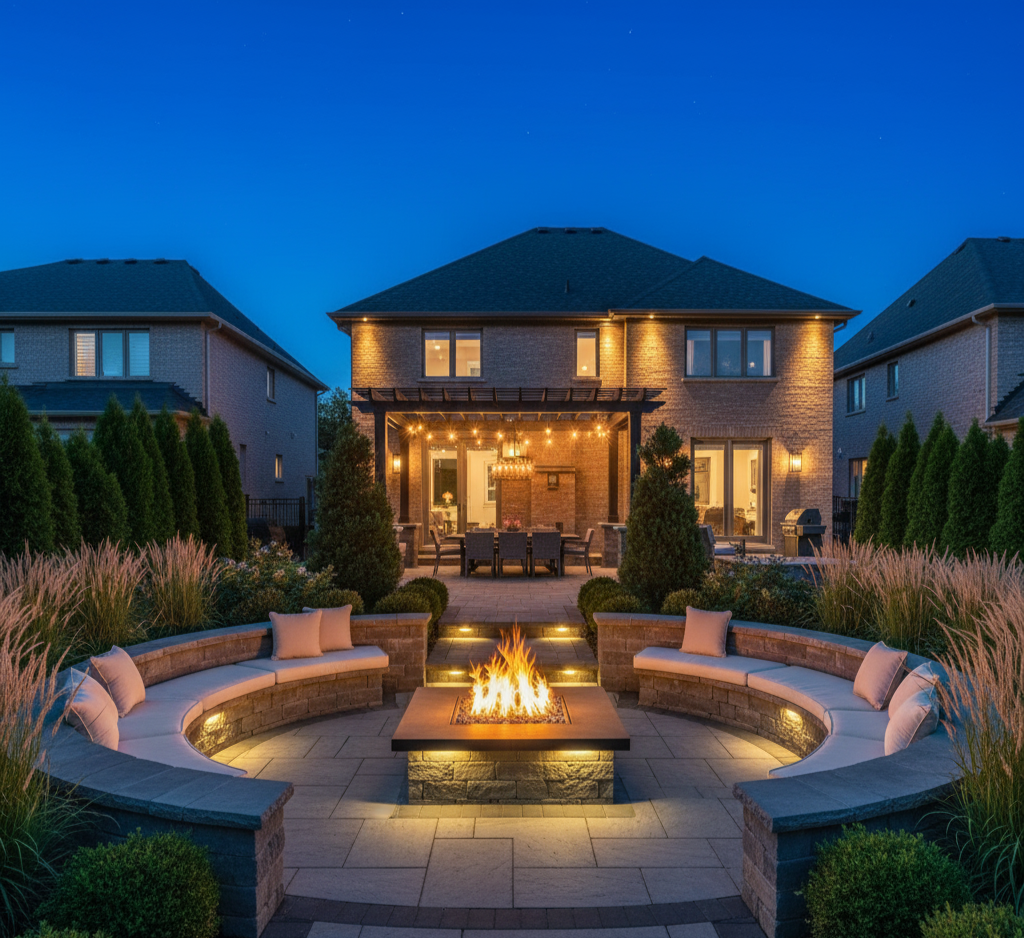
For the homeowner in Mississauga, Oakville, or Vaughan, the "Interlock vs. Concrete" question often pits traditional aesthetics against modern performance. While interlock pavers have dominated the suburban landscape for 30 years, the shift toward contemporary architecture in 2026 has brought concrete back to the forefront.
At CININTIRIKS, we design with both. However, as specialists in longevity, we believe the verdict for the busy, modern homeowner is clear. This guide breaks down the four critical battles that define this choice.
Battle 1: Maintenance (The Weed Factor)
Interlock (The High-Maintenance Choice):
The Achilles' heel of interlock is the joint. Even with advanced "polymeric sand" technology, nature
eventually wins. Ants mine the sand, rain washes it out, and inevitably, weeds find purchase.
Maintaining a pristine interlock driveway requires annual pressure washing, re-sanding every 3-5
years, and constant vigilance against vegetation.
Concrete (The "Set It and Forget It" Choice):
Concrete is monolithic. There are no seams for weeds to colonize. There is no sand to wash away.
Maintenance consists of a simple wash with a garden hose and a reseal every few years to keep the
colour vibrant. For the homeowner who values their weekends, concrete is the only logical choice.
Battle 2: Durability (The Freeze-Thaw War)
Interlock (Flexible & shifting):
Pavers are designed to "float" on a bed of sand and gravel. In theory, this allows them to move with
the frost. In practice, in the GTA's wet winters, this means they heave unevenly. Over 5-7 years,
tire ruts develop where you park your car, and individual stones can lift, creating trip hazards
that require costly "lift-and-relay" repairs.
Concrete (Rigid & Bridging):
A concrete slab, reinforced with steel rebar (The Cinintiriks Standard), acts as a bridge. If a soft
spot develops in the sub-grade, the structural integrity of the slab spans over it. While concrete
can crack if poorly engineered, a properly installed slab will remain flat and level for 40+ years.
"Interlock asks you to maintain it. Concrete serves you."
Battle 3: Aesthetics (The Modern vs. The Traditional)
Interlock:
Pavers offer an old-world, "cobblestone" charm that suits Victorian or Tudor-style homes
beautifully. However, on a modern custom build with clean lines and large glass panels, the busy,
repetitive pattern of small bricks can feel cluttered and dated.
Concrete:
Concrete offers visual silence. The expansive, seamless surface compliments modern architecture
perfectly. It does not compete with the fa�ade of the house; it grounds it. With finishes ranging
from exposed aggregate to smooth architectural borders, it is the choice for luxury minimalism.
Battle 4: The Investment
Installation Cost:
Historically, interlock was cheaper. In 2026, with the rise in labour costs (laying thousands of
stones by hand is slow), the gap has narrowed. High-end permeable pavers often cost more
per square foot than a premium exposed aggregate concrete driveway.
Lifetime Cost:
When you factor in the cost of re-sanding, weed control chemicals, and re-leveling repairs over 20
years, interlock is significantly more expensive to own. Concrete is an upfront investment that pays
dividends in low maintenance.
The Cinintiriks Hybrid Solution
Can't decide? Don't. The most sophisticated driveways we design use interlock as an accent. We pour a structural concrete driveway (for the heavy lifting and weed-free center) and frame it with a double-row soldier course of high-end pavers. This provides the durability of concrete with the aesthetic softness of stone.
The Verdict for the GTA Climate
Toronto's climate—with its erratic freeze-thaw cycles and heavy salting—is brutal on modular systems like pavers. The hydraulic pressure of freezing water pops stones and erodes sand.
If you enjoy gardening and don't mind the "patina" of moss and weeds, interlock has a distinct charm. But if you view your driveway as an architectural extension of your home—one that should look as clean in year 10 as it does in year 1—engineered concrete is the superior material.
FAQ: Common Questions
Can I pour concrete over my old interlock?
Absolutely not. The pavers are not a stable base. They move. Pouring over them guarantees the concrete will crack. We must remove the pavers (which can often be resold!) and prep the base properly.
Which adds more value to my home?
It depends on the architecture. For a modern renovation in Etobicoke or North York, a clean concrete driveway is expected by buyers. For a heritage home in Unionville, heritage pavers might be preferred. Generally, the lower maintenance of concrete is a strong selling point.
What about drainage?
Interlock is often sold as "permeable." However, once the joints clog with sediment (usually within 2 years), it becomes impermeable. We pitch our concrete surfaces with laser precision (1.5% slope) to shed water effectively away from your foundation.
Upgrade to Elegance
Stop pulling weeds. Stop worrying about sinking tire tracks. Elevate your property with the seamless, enduring elegance of a Cinintiriks concrete driveway.