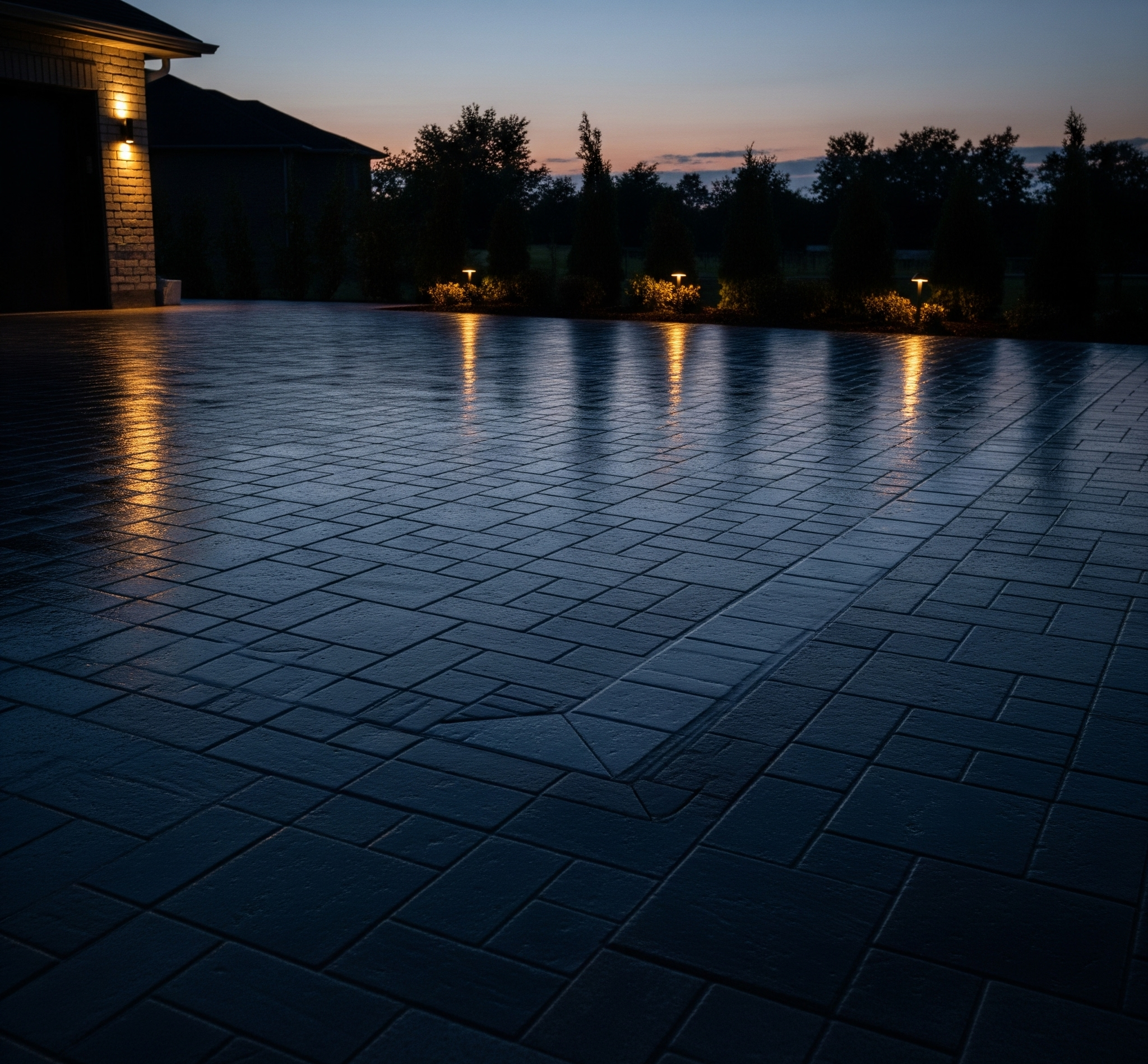
Concrete is, by its very nature, a brittle material. It possesses immense compressive strength but limited tensile strength. However, the pervasive belief that "all concrete cracks eventually" is a myth perpetuated by those who view the material as a commodity rather than an engineered solution.
At CININTIRIKS, we operate under a different philosophy: While microscopic shrinkage is a chemical reality, visible structural cracking is a preventable failure. This 2026 Engineering Guide dissects the physics of failure in the Ontario climate and outlines the rigour required to defeat it.
The Ontario Factor: Design vs. Environment
To build in Toronto, Mississauga, or Richmond Hill is to build in a hostile environment. We do not enjoy the temperate stability of Vancouver or the dry heat of Arizona. We experience a "thermal shock" climate.
In July, surface temperatures can exceed 50�C. In February, they can plunge to -30�C. This 80-degree swing forces materials to expand and contract violently. If the concrete is not designed to accommodate this movement—or if the ground beneath it shifts—failure is mathematically inevitable.
The "Big Three" Causes of Structural Failure
When we are called to inspect a failed driveway in Oakville or North York, the culprit is almost always one of three foundational errors.
1. Sub-Base Failure (The Invisible Enemy)
Concrete is rigid. It cannot bridge a void. If the soil beneath the slab settles, the concrete is left suspended in air. Under the weight of a vehicle, it snaps.
This is particularly critical in the "Clay Belt" of Mississauga and Vaughan. Clay is expansive—it swells when wet and shrinks when dry. A standard 4-inch gravel base is insufficient here. We often excavate 12-18 inches effectively replacing the native, unstable soil with engineered, non-expansive granular fill.
2. The Hydraulic Wedge (Freeze-Thaw)
Water is the only substance on earth that expands when it freezes (by approximately 9%). If water penetrates a microscopic fissure in the concrete and freezes, it acts like a hydraulic wedge, forcing the crack open further. Over one winter, a hairline fracture becomes a structural break.
3. Improper Curing (The Chemical Bond)
Concrete does not "dry"; it cures. It is an exothermic release of heat. If the water in the mix evaporates too quickly (common in our hot Ontario summers), the chemical lattice does not form correctly. This leads to "plastic shrinkage cracks"—spiderweb-like fissures that appear days after the pour.
"We do not build on dirt. We build on physics."
The Prevention Protocol: The Cinintiriks Standard
How do we engineer against these forces? We treat the driveway not as a slab, but as a system.
1. Reinforcement: Rebar vs. Wire Mesh
In the high-end residential sector, standard wire mesh is widely considered the minimum code compliance. At CININTIRIKS, we frequently specify 10M or 15M steel rebar grids, tied at 12-inch intervals.
Rebar provides true tensile strength. It acts as the skeleton of the slab. Even if a hairline crack develops due to thermal contraction, the steel holds the two faces together tightly, preventing them from separating or shifting vertically (heaving).
2. Control Joints: The "Planned Relief Valve"
We cannot stop the earth from moving, but we can direct where the concrete relieves its stress. Control joints are deliberate cuts made into the slab at calculated intervals (typically every 8-10 feet).
These are not random. They are designed geometrically to align with the architecture of the home. By creating a straight, weakened plane, we force any potential cracking to occur inside the joint, where it is invisible and irrelevant to the surface aesthetics.
3. The High-Performance Mix Design
We do not order "standard" concrete. Our mix designs for 2026 include:
- 32 MPa Strength: Far exceeding the 25 MPa residential standard.
- Air Entrainment (5-7%): Millions of microscopic air bubbles that act as expansion chambers for freezing water.
- Low Water-Cement Ratio: Creating a denser, less permeable paste.
- Fibre Reinforcement: Millions of tiny fibres creating a secondary internal mesh.
Red Flag Warning
If a contractor tells you "cracks just happen, it's unavoidable," they are admitting a lack of engineering control. While microscopic shrinkage is natural, visible random cracking is a symptom of cut corners—usually in the sub-base preparation or the control joint layout.
Maintenance as Prevention
Even the finest engineering requires stewardship. As the owner of a premium concrete asset, your role is protection.
Sealing: We view sealing as "closing the pores." A high-solids siloxane or acrylic sealer prevents water and chlorides (salt) from entering the matrix. This should be reapplied every 2-3 years.
Winter Protocols: Never use rock salt (Sodium Chloride) on decorative concrete. It is corrosive. Use Magnesium Chloride if necessary, or better yet, opt for a heated driveway system to eliminate chemical use entirely.
Getting Quotes: The Filter
When interviewing contractors in the GTA, ask two critical questions to reveal their engineering standards:
1. "What is your sub-base compaction standard?" (If they don't say "98% Standard Proctor" or mention "mechanical compaction in lifts," be wary).
2. "How deep do you cut your control joints?" (The answer must be "at least 1/4 the depth of the slab").
FAQ: Expert Insights
Can I fix a crack without it looking like a patch?
It is difficult. While we can use colour-matched epoxy or polyurethane injection to seal a crack structurally, the scar will often remain visible. This is why prevention is the only true strategy for aesthetics.
Does wire mesh prevent all cracks?
No. Wire mesh is primarily for "holding it together" after a crack forms. It is often trampled into the dirt during the pour, rendering it useless. This is why we prefer chair-supported rebar.
Why did my neighbour's new driveway crack in one year?
Almost invariably, this is due to "differential settlement"—the ground beneath one side of the driveway settled more than the other, snapping the slab. It is a failure of the base, not the concrete.
The Verdict
A flawless driveway is not an accident of nature. It is the result of geology, chemistry, and physics being harnessed by design. In the unforgiving climate of Ontario, there are no shortcuts to longevity. There is only engineering.