The Lifecycle Liability
Let us address the brutal reality of industrial operations. A commercial logistics yard in Brampton is subjected to immense structural violence every single day. The concrete and asphalt are continuously assaulted by the grinding, multi-ton weight of transport axles. At the same time, the surface is constantly bombarded by highly corrosive hydraulic fluid spills, diesel leaks, and caustic chemicals. When winter arrives, the pavement is further brutalized by extreme freeze-thaw cycles and thousands of pounds of highly corrosive de-icing salts.
Without an engineered, proactive maintenance cycle, these factors act in a destructive synergy. Oil breaks down the binders in the asphalt or penetrates the pores of the concrete. Water follows the oil into the microscopic capillaries. When that water freezes, the immense hydraulic pressure blasts the surface apart from the inside out, causing massive spalling. The resulting cracks allow water to flood the sub-base beneath, completely dissolving its load-bearing capacity and guaranteeing a complete structural collapse under the next heavy transport load.
The Engineering: The Proactive Cycle
To protect your asset, we must demystify the commercial maintenance calendar. Industrial pavement maintenance is not about sweeping the lot; it is a heavy civil engineering process that requires surgical precision, deployed at specific times of the year.
Spring: Thermal Extraction
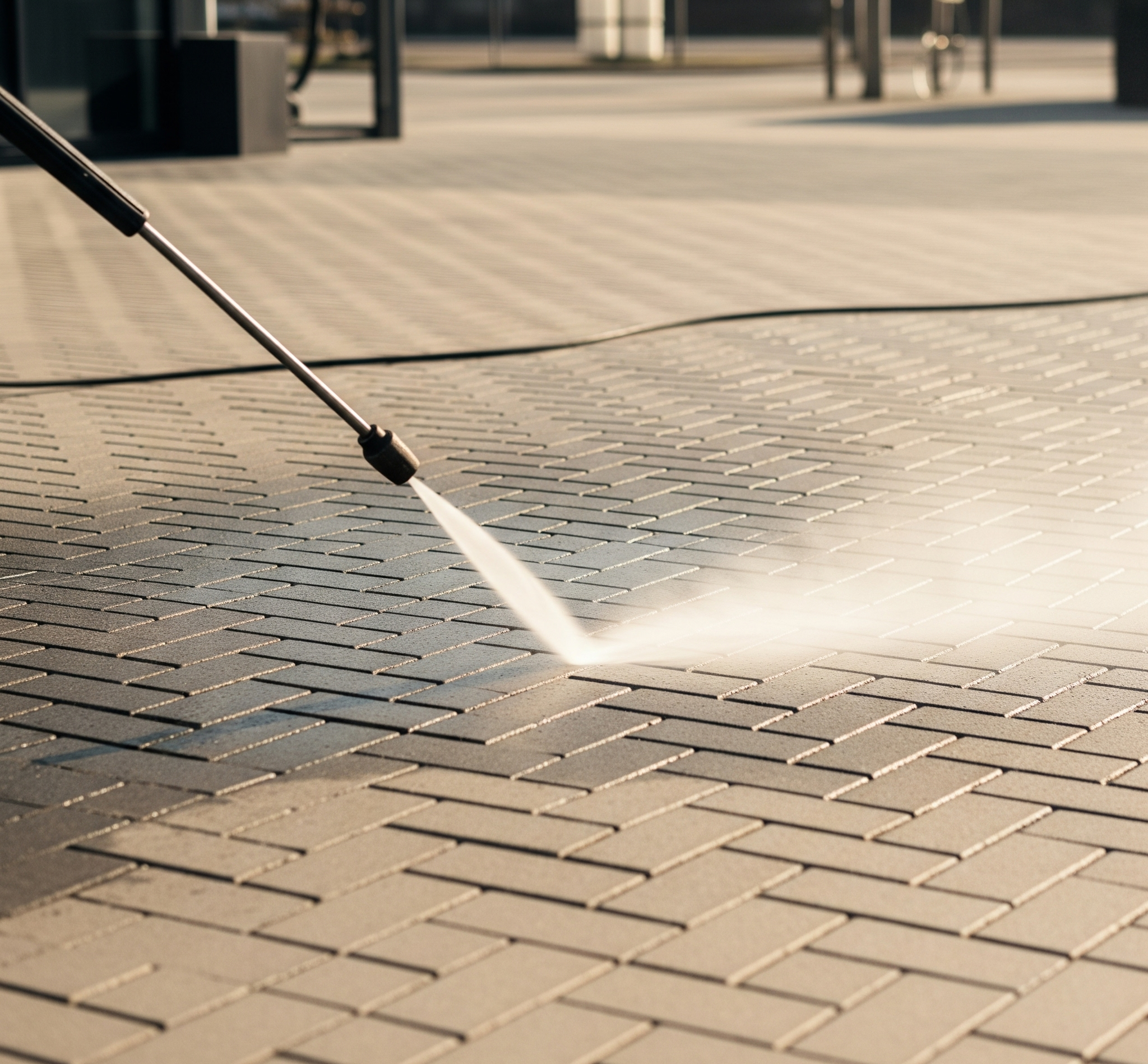
The moment the brutal Brampton winter recedes, your logistics yard is highly vulnerable. The concrete pores are entirely saturated with caustic winter de-icing salts and a season's worth of petrochemical spills. Spring maintenance mandates the absolute necessity of commercial thermal (hot water) chemical extraction. This is not a standard pressure washing. We deploy engineered, 200°F (93°C) heated extraction paired with heavy-duty surfactants to physically melt and pull the corrosive salts and deep-seated oils entirely out of the concrete's capillaries. We then vacuum the toxic slurry away, leaving the slab chemically neutralized and structurally sound.
Summer/Fall: Joint Rehabilitation & Molecular Sealing
As the dry heat of summer arrives and extends into the early fall, we enter the critical window for structural protection before the next freeze-thaw cycle begins. The first priority is expansion joint maintenance. We rigorously inspect all isolation joints. Any deteriorated, cracked, or missing closed-cell neoprene foam is surgically removed and replaced. This ensures the concrete can freely expand without violently crushing itself, and prevents water from infiltrating the sub-base.
Finally, we execute the ultimate defense: heavy duty concrete sealing. We do not use cheap topical acrylics that wear away in weeks. We apply deep-penetrating silane/siloxane molecular sealants. These engineered chemicals penetrate deep into the concrete and chemically bond with the silica, completely waterproofing the slab from the inside out. When the winter rains and freezing slush return, the water will simply bead up on the surface, entirely unable to penetrate the concrete and cause spalling or frost heave.
The Segmental Advantage: Interlock Maintenance
We must also discuss the maintenance differences for facilities that have upgraded to high-density commercial interlocking pavers. This is the ultimate industrial interlock care advantage.
While monolithic concrete requires a constant, expensive battle against thermal cracking and joint failure, segmental paver maintenance is entirely different. Because pavers naturally flex with the ground, they do not crack. Paver maintenance is surgically focused. The primary requirement is stabilizing the polymeric jointing sand—ensuring the seams between the blocks remain full and locked, which prevents water infiltration. If a specific area of the logistics yard suffers a catastrophic hydraulic fluid spill that permanently stains the surface, we do not need to jackhammer the facility and pour an ugly concrete patch. We simply extract the affected interlocking blocks and drop in brand new ones, flawlessly restoring the yard's structural integrity and aesthetic in a matter of hours.
The Cinintiriks Approach
This brings us to "The Cinintiriks Standard." We understand that a commercial facility must remain operational, and we know exactly what is required to protect it. We do not just pour concrete and disappear.
We engineer lifecycle longevity in Brampton. We offer rigorous structural inspections, commercial-grade chemical extraction, and premium molecular sealing. We manage the harsh Canadian climate so you don't have to. By partnering with us for a heavily engineered maintenance schedule, you ensure your logistics yard remains a bulletproof, high-performing asset for decades, completely eliminating the liability of sudden structural failure.
FAQ: Industrial Pavement Maintenance
How often should a heavy-duty industrial concrete pad be professionally chemically sealed?
Under the brutal conditions of a logistics yard in Ontario, commercial concrete should be professionally sealed every 2 to 3 years. The frequency depends heavily on the volume of transport traffic and the severity of chemical exposure (such as constant de-icing salt applications or hydraulic fluid leaks). A deep-penetrating silane/siloxane molecular sealer provides the absolute best defense, bonding chemically within the pores to create an invisible, waterproof barrier that prevents spalling and deep staining.
What happens to the concrete slab if deteriorated expansion joints are not replaced?
Expansion joints are the critical relief valves of a massive concrete slab. If the compressible foam or sealant within the joint deteriorates, two catastrophic things occur. First, incompressible debris (like rocks and sand) fills the joint. When the massive slabs expand in the summer heat, they hit these rocks, causing the edges of the concrete to violently spall and shatter. Second, the open joint becomes a direct funnel for rainwater to flood the sub-base, completely destroying the load-bearing foundation beneath the slab and guaranteeing a sinkhole under heavy axle loads.
Can winter de-icing salts structurally destroy high-PSI commercial concrete?
Absolutely. While high-PSI concrete is dense, it is still fundamentally porous. When de-icing salts melt ice, they create a highly corrosive saline solution that is absorbed deep into the concrete's capillaries. Once inside, the salt chemically attacks the cement paste, breaking down the bonds that hold the aggregate together. Furthermore, if the concrete contains structural steel rebar, the salt water will rapidly corrode the steel. As the steel rusts, it expands with immense force, violently blowing the concrete apart from the inside (a process known as concrete spalling or "cancer").
The Final Word
Stop waiting for your industrial pavement to fail before fixing it. Contact Cinintiriks for a heavily engineered commercial maintenance and sealing program in Brampton.